Tina Law, assistant professor of sociology, has just been
selected to receive a 2026-2027 UCOP Early Career Faculty
Research Excellence Award. Law, a faculty affiliate of the Center
for Poverty and Inequality Research and the Computational Social
Science Designated Emphasis Program, studies inequality, race and
ethnicity, political sociology and AI and specializes in
computational methods.
Source: UC Davis College of Letters and Sciences: A Message from
Dean Atekwana | May 13, 2026
January 01, 2026
UC Davis Letters & Science Magazine
Alex Russell
The U.S. is the world’s wealthiest nation and yet, year after
year, a significant share of the population lives in poverty. The
experience of poverty touches every part of a person’s life.
“Poverty is correlated with nutrition, sleep, and your sense of
security and comfort in your own skin,” said Marianne Page, a
professor of economics and co-director of the UC Davis Center for
Poverty and Inequality Research.
November 10, 2025
UC Davis Letters & Science Magazine
Alex Russell
Payments through SNAP, the federal food assistance program, have
been delayed during the government shutdown, but program cuts in
this summer’s budget bill already put vulnerable families at
long-term risk of going hungry.
July 02, 2025
UC Davis Letters & Science Magazine
Alex Russell and Maria Sestito
White picket fences. Green, manicured lawns. Children on
bicycles.
The “American Dream” conjures images of a suburban ideal and
elicits hope and optimism, especially for immigrants and for
those fighting for democracy in their own countries. At the same
time, entire segments of society have been denied equality,
freedom and life. Even today, the promise of the American Dream
for millions remains completely out of reach.
May 6, 2025
Letters and Science Magazine
By Alex Russell
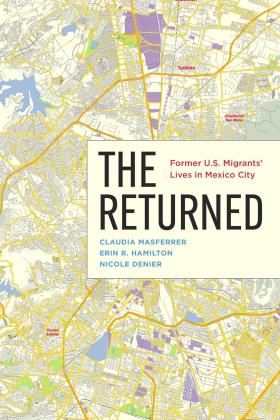
Rocío’s story of moving back and forth between the U.S. and
Mexico isn’t like any you’ve heard before. It began when her
daughter, 15 at the time, ran away with a man who took her from
Mexico City to the U.S.
UC Davis is a powerhouse for breakthroughs and impact. Our
interdisciplinary research plays a vital role in building the
region’s economy. Our research contributes to our nation’s global
leadership in technology and innovation. Through collaboration
between our top-ranked hospital and veterinary school, as well as
our science and engineering discoveries, our research directly
improves American lives.
August 26, 2024
Letters and Science Magazine
By Alex Russell
Dominic Arreola started taking classes in Chinese in community
college. He quickly gained a passion for the language and the
culture, and by the time he transferred CSU Long Beach he was
steeped in the history and tensions between China and the United
States. He worried more and more about the potential for
war.
ROCKY Hill, Conn.—Some of the country’s savviest economic trend
predictors spend all day answering call-center phones.
Operators at 211 emergency helplines raised alarm bells about
a baby formula shortage ahead of the headlines about
empty shelves. And they knew that families were defaulting on
their mortgages before the subprime collapse in
2008.
Just as the Republicans’ default solution to any domestic problem
is “lower taxes,” Democrats insist on “more education, especially
college education.” But this obsession with education is
misplaced, and in some cases actually harmful to the project of
building “a more perfect union.” A better tactic for Democrats
would be to raise wages through government policies, especially
those aimed at workers without college educations.
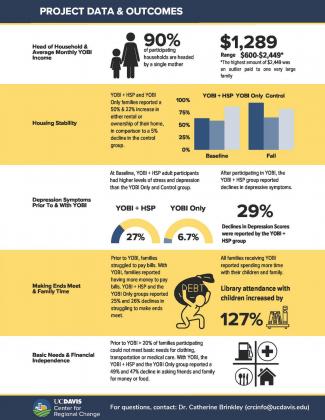
In 2022, Yolo County Health and Human Services Agency(HHSA)
launched the Yolo County Basic Income (YOBI)project and engaged
the UC Davis Center for Regional Change to evaluate the project
via the collection of survey data from YOBI participants. The
YOBI project was designed to address the county’s poverty, which
is ~25%higher than the California rate reported in the 2021
Census.
US President Joe Biden and Chinese President Xi Jinping are to
meet on Wednesday in the San Francisco Bay area. The encounter
will be only their second face-to-face meeting during the Biden
presidency. Trade, technology, the Israel-Gaza war and Taiwan are
among the issues likely to be on the agenda. Relations between
the two countries deteriorated earlier this year.
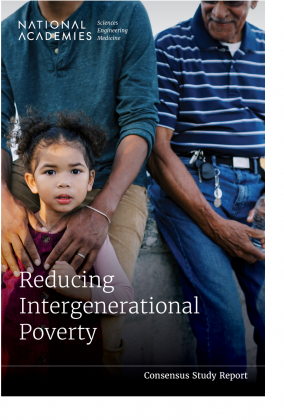
Experiencing poverty during childhood can lead to lasting harmful
effects that compromise not only children’s health and welfare
but can also limit them to a lifetime of poverty that passes on
to future generations. This cycle of economic disadvantages
weighs heavily not only on these families but also the nation,
reducing overall economic output and placing increased burden on
the educational, criminal justice, and health care systems.
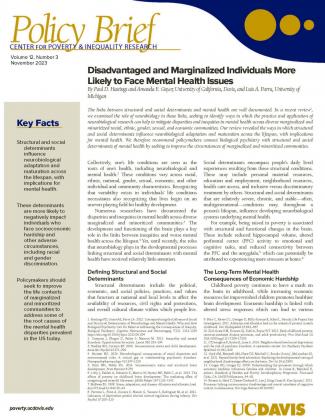
Dr. Weissman’s paper on the antipoverty programs and income
disparities in brain structure and mental health was published by
Nature Communications. David Weissman is the study’s lead author
and a postdoctoral fellow in McLaughlin’s Stress & Development
Lab at Harvard University. Former CPIR affiliate Dr. Weissman
received his PhD in Psychology from the University of California,
Davis, where he worked under the mentorship of CPIR affiliates
Dr. Paul Hastings and Dr. Amanda Guyer.
Abstract: Macrostructural characteristics, such as cost of living
and state-level anti-poverty programs relate to the magnitude of
socioeconomic disparities in brain development and mental health.
In this study we leveraged data from the Adolescent Brain and
Cognitive Development (ABCD) study from 10,633 9-11 year old
youth (5115 female) across 17 states. Lower income was associated
with smaller hippocampal volume and higher internalizing
psychopathology. These associations were stronger in states with
higher cost of living. However, in high cost of living states
that provide more generous cash benefits for low-income families,
socioeconomic disparities in hippocampal volume were reduced by
34%, such that the association of family income with hippocampal
volume resembled that in the lowest cost of living states. We
observed similar patterns for internalizing psychopathology.
State-level anti-poverty programs and cost of living may be
confounded with other factors related to neurodevelopment and
mental health. However, the patterns were robust to controls for
numerous state-level social, economic, and political
characteristics. These findings suggest that state-level
macrostructural characteristics, including the generosity of
anti-poverty policies, are potentially relevant for addressing
the relationship of low income with brain development and mental
health.
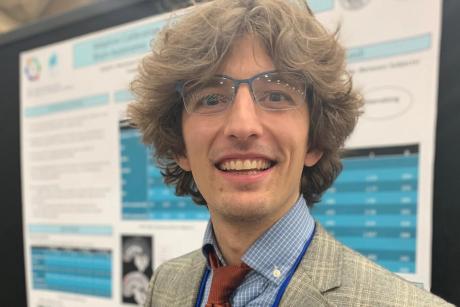
Sociology PhD Candidate, Paola Langer, won the 2023 Population
Association of America Poster Award for her work,
State-Level Spending and Black–White Mortality
Gaps
Sociology PhD Candidate, Paola Langer, won the 2023 Population
Association of America Poster Award for her work,
State-Level Spending and Black–White Mortality
Gaps
March 10, 2023
UC Davis College of Letters and Science
By Kathleen Holder
Marianne Page can count numerous accomplishments during her
career as an economics professor in the College of Letters and
Science at UC Davis, but none like an honor recently bestowed by
a Napa Valley winemaker.
December 2, 2022
The Davis Enterprise By Chancellor Gary May
Homelessness is one of the most defining and troubling challenges
of our times. According to a report by CalMatters, a
nonprofit and nonpartisan news organization, about 173,800
unhoused people are living in California. That’s an increase of
more than 22,000 since 2019.
December 2, 2022 – Three CPIR research affiliates have been featured in a new article in the ‘Ask the Expert’ series published by the UC Davis Office of Research.
A historic learning loss was reported this week, showing the
impacts of virtual learning during the pandemic. Nearly 500,000
fourth and eighth graders took tests nationwide and while no
single state saw an increase in test scores, Black and Latino
students were hit the hardest.
California’s 2022 Smarter Balanced assessment from tests taken in
the Spring of 2022 showed a decline in English Language Arts
and Math score testing.
Results for Northern California school districts showed dips from
2.91% to 8.18%.
UC Davis Health Advancing Health Equity, Diversity and
Inclusion Blog
August 17, 2022
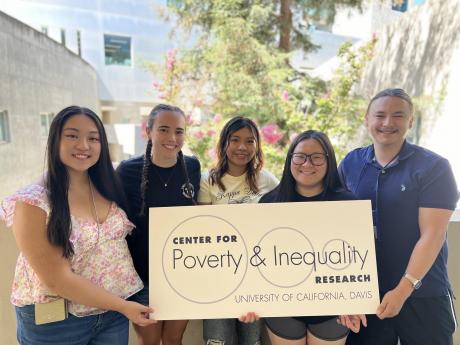
At the UC Davis Center for Poverty and Inequality Research,
we conduct, support, promote and disseminate cutting-edge
academic research related to what we regard as two of the most
pressing and urgent issues facing the United States today:
poverty and inequality.
Boston University Public Health Post
June 20, 2022
COVID resulted in greater attention to the role unions can play
in promoting the health of workers and their families.
Blue-collar and essential workers faced the virus every day while
many of their managers and most white-collar workers were able to
work from home. Unions were the vanguard, advocating for the
provision of masks, personal protective equipment, distancing,
clean workplaces, and hazard pay. An unprecedented number of
strikes occurred in the fall of 2021 resulting in what some
labeled “Striketober.” And Christian Smalls, the
leader of the new Amazon Labor Union, stated that, without
management’s indifference to COVID, he would never have tried to
organize his co-workers. While union membership is at a
65-year low (6% in the private sector), public
support for unions is 68%, a 55 year high.
The three-year fellowships are part of the College of Letters and
Science Faculty Investment Initiative to support early faculty
research excellence and development.
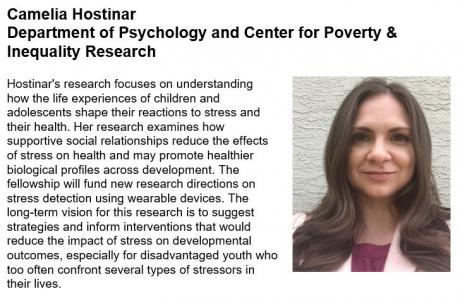
Camelia Hostinar
Department of Psychology and Center for Poverty & Inequality
Research
The 2020 Census revealed that 28.4% of the people from Yolo
County have an income below 150% of the poverty level. The
poverty rate in Yolo County is at 20.9%, according to a 2022
press release. Experts and researchers from UC Davis have weighed
in on the rising crisis of poverty in Yolo County, emphasizing
the need for county action.
Recessions in California tend to widen the gap between rich and
poor. The sharp pandemic downturn of 2020 followed this pattern
with low-income workers suffering the most. But unprecedented
government relief kept millions from falling into poverty, and
demand for labor boosted wages when businesses reopened.
UC Davis College of Letters and Science
October 13, 2021
The UC Davis Center for Poverty and Inequality Research recently
received a $353,421 federal grant to launch a program to
help up-and-coming poverty scholars get their careers off to a
strong start.
The Early Career Mentoring Institute, which will run for one week
each spring of 2022, 2024 and 2026, aims to nurture a diversity
of scholars studying poverty and social mobility.
Two faculty members and a doctoral student in sociology recently
received the Best Publication Award for 2021 from the American
Sociological Association’s Sociology of Mental Health Section.
The Rural Sociological Society will honor Professor Lisa
Pruitt on Sunday, Aug. 1 with its Excellence in Research
award.
The awards ceremony will take place virtually as part of the
society’s 83rd Annual Meeting. Pruitt also will participate
in conference panels.
The society’s Awards and Endowment Committee has lauded Pruitt’s
contributions to rural research and scholarship as “truly
unique,” noting that Pruitt has “brought important attention to
rural legal issues.”
UC Davis College of Letters & Sciences
June 17, 2020
Camelia Hostinar, an assistant professor of psychology, will
receive an American Psychological Association early career award
for her research investigating how poverty influences children’s
development.
The APA’s developmental psychology Division 7 recently
selected Hostinar for a 2022 Boyd McCandless
Award, which recognizes young scientists who make exceptional
contributions to the field during the first eight years of
their academic career.
As debate continues over how to complete the Affordable
Care Act’s Medicaid expansion, it’s important to remember the
crucial role Medicaid plays in births in our country. Medicaid
covers 4 in 10 births, and there’s a renewed push
to expand Medicaid coverage for new moms. There’s also
growing research showing that for kids, the benefits of Medicaid
coverage persist well into adulthood, in the form of better
health and higher earnings.
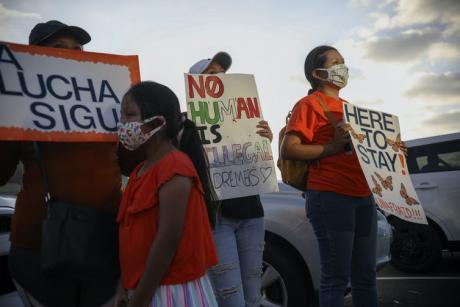
A profound change has been proposed by the Biden
administration for U.S. immigration law. Following up
on candidate Joe Biden’s promise of immigration reform
legislation, the U.S. Citizenship Act would eliminate the term
“alien” from the U.S. immigration laws.
The country’s bedrock immigration law, the Immigration and
Nationality Act, would be amended to say that “[t]he term
‘noncitizen’ means any person not a citizen or national of the
United States.”
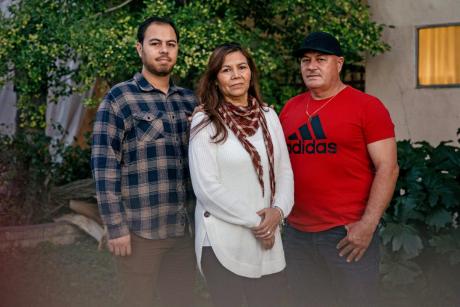
Maria Elena Hernandez recently retrieved a flowery box tucked in
her closet and dusted it off. For more than a decade, she has
used it to store tax returns, lease agreements and other
documents that she has collected to prove her family’s long years
of residence in the United States.
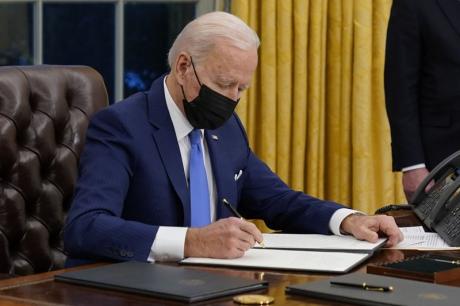
President Joe Biden on his first day in office sent Congress an
extensive immigration proposal that could have big implications
for California, which is home to the largest undocumented
immigrant population in the nation.
The plan, known as the U.S. Citizenship Act of 2021, would
provide a pathway to citizenship to the 11 million unauthorized
immigrants living in the United States. About 2 million of them
live in California.
It’s no secret that rural and urban people have grown apart
culturally and economically in recent years. A quick
glance at the media – especially social media – confirms an
ideological gap has also widened.
City folks have long been detached from rural
conditions. Even in the 1700s, urbanites labeled rural
people as backward or different. And lately, urban views of
rural people have deteriorated.
Congratulations to previous participants in our Visiting Graduate
Student program on the publication of their paper. Kathryn
Edwards, Jennifer Scott, and Alex Stanczyk met in 2014 through
the Center for Poverty and Inequality Research’s Visiting
Graduate Student program. They recently published “Moonlighting
to the Side Hustle: The Effect of Working an Extra Job on
Household Poverty for Households With Less Formal
Education,” a paper they began working on during our
program. Read the paper published in Families in Society: The
Journal of Contemporary Social Services below.
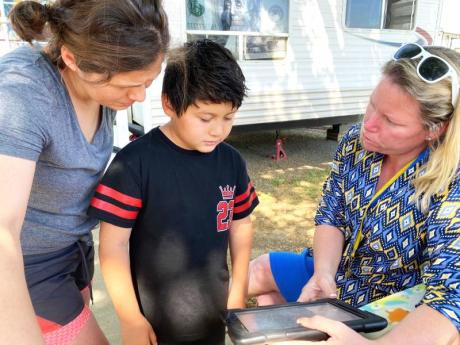
Third grade teacher Alena Anberg cruised down Highway 99 in her
Ford F-150, past acres of almond orchards that split the terrain
just outside her hometown of Arbuckle in Colusa County. She grew
up in this town of 3,000 and knows the back roads well, which
helped as she made several stops to deliver iPads, laptops and
old smart phones with SIM cards installed to turn them into Wi-Fi
hot spots.
Our Center was founded in 2011 as one of three federally
designated Poverty Research Centers. As our Center has grown over
the past nine years, so too has our research agenda, expanding
beyond a strict focus on poverty to include overlapping
dimensions of social and economic inequality. Today, Center
affiliates’ research contributes to our understanding of the
causes and consequences of, and solutions to, economic
disadvantage as it relates to race and ethnicity, geospatial
context, gender, immigrant status, and disability.
How you survive the coronavirus crisis may depend on your ZIP
code. Even before the Bay Area shuttered schools and parks,
businesses and restaurants, the region was known for its vast
economic divides.
In a stinging blow to the Trump administration, Thursday’s
Supreme Court decision found the administration’s attempt to
terminate the Deferred Action for Childhood Arrivals program,
known as DACA, was “arbitrary and capricious.”
With the COVID-19 pandemic accelerating in March,Congress
scrambled to design a more than $2 trillion economic package that
would prop up private companies, keep the financial system
liquid, and, at the same time, provide financial help to
individuals whose income was evaporating as the result of states
issuing stay-at-home orders and temporarily shuttering
nonessential businesses.
Maricruz Ladino spends long nights in a freezing lettuce cooler,
inspecting and packaging pre-washed salad mixes. She usually
starts her shift around 4 p.m., after the pickers are done in the
fields, working until at least 2 or 3 in the morning.
SACRAMENTO — Continuing his commitment to strengthen,
innovate and grow California’s economy, Governor Gavin Newsom
today announced the creation of his Council of Economic Advisors.
The Council will advise the Governor and Director of the
California Department of Finance Keely Martin Bosler on
wide-ranging economic issues and deepen relationships between the
Administration and academic researchers to keep California moving
toward an economy that is inclusive, resilient, and sustainable.