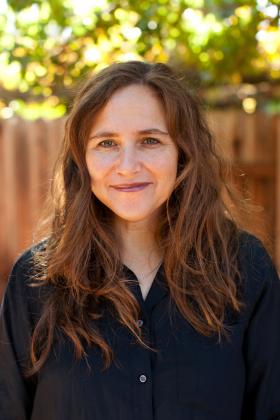
Nutrition policy, dietary assessment, and obesity prevention.
Poverty and Inequality Research
I research ways to improve the nutritional quality of
the federal nutrition assistance programs, such as the
Supplemental Nutrition Program for Women, Infants, and Children
(WIC).
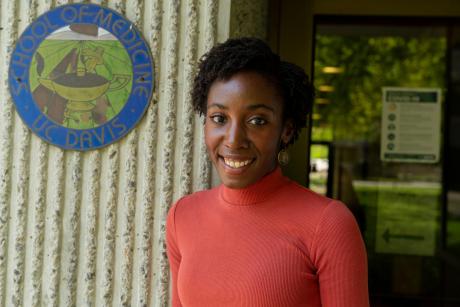
Sindana Ilango is an Assistant Professor in the Department of
Public Health Sciences and the Center for Occupational and
Environmental Health. She is an environmental epidemiologist
whose research focuses on the impacts of climate change on older
adults. Her current work involves understanding racial/ethnic and
socioeconomic disparities in environmental exposures and
aging-related health outcomes, as well as the impacts of
environmental policies on air pollution and health.
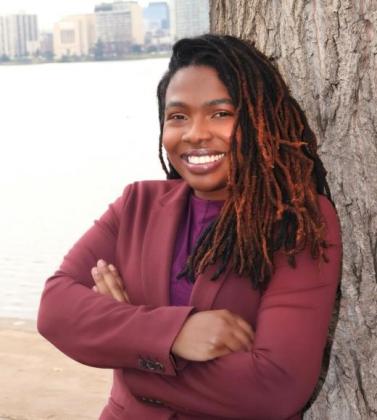
Dr. Brittany Chambers Butcher is a community health scientist
dedicated to advancing sexual and reproductive health equity
among Black, Indigenous, and Other People Of Color’s (BIPOC). She
merges critical and public health theories to partner with BIPOC
women and birthing people and organizations to better understand,
operationalize and dismantle racism.
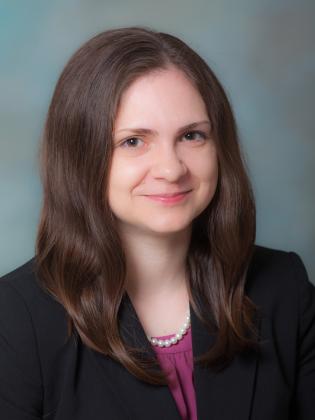
Dr. Kristen George is an Assistant Professor of Epidemiology in
the Department of Public Health Sciences at the University of
California, Davis, School of Medicine. She received her BA in
Political Science with minors in Public Health and Anthropology
from Washington University in St. Louis. She received her MPH and
PhD in Epidemiology with a minor in Biostatistics from the
University of Minnesota. Her research focuses on lifecourse
vascular contributions to dementia and cognitive aging with a
particular interest in race and sex disparities.
Lenna Ontai is a Professor of Cooperative Extension whose work
focuses on the development of children’s health-related behaviors
in the family context. Her current work is focused on
understanding how families navigate barriers to facilitating
children’s adoption of healthy lifestyle behaviors in early
development. She actively translates and disseminates research in
this area to inform UC Cooperative Extension programs that serve
families living with limited incomes.
Trained in environmental health and epidemiology, Dr. James has
focused his research on estimating the influence of spatial
factors, including exposure to nature, the built environment, the
food environment, air pollution, light pollution, noise, and
socioeconomic factors, on health behaviors, mental health, aging,
and chronic disease within large prospective cohort studies. He
has developed methodologies link smartphone-based global
positioning systems (GPS) and wearable device accelerometry data
to understand how spatial factors influence health behaviors.
Dr. Valle is an Assistant Professor of Sociology at
the University of
California, Davis. She is a scholar of migration, race and
ethnicity, and political sociology focusing on the experiences of
Latina/os in the United States.
Dr. Dulce Westberg is an Assistant Professor of Psychology
at the University of California, Davis. Her research examines how
individuals from racially and ethnically minoritized groups
navigate social structures, and how these structures shape
personality and identity development. Drawing on both qualitative
and quantitative methods, she explores life narratives related to
race, ethnicity, gender, and social class to understand their
links to psychosocial adjustment.
I study neighborhood inequality in US cities. Why are some
neighborhoods more disadvantaged than others? What are the
consequences of neighborhood disadvantage for health and
well-being? What are the causes and consequences of moving to a
more-advantaged neighborhood?
I have a specific interest in understanding these issues as they
relate to adolescents and young adults, with a particular focus
on the ways in which schools and neighborhoods interact to impact
poverty and inequality.
Courtney Lyles, PhD, is the Director of the UC Davis Center
for Healthcare Research and Policy (CHPR) and the Arline Miller
Rolkin Endowed Professor in Informatics. With over 15 years in
academia, Dr. Lyles has wide-ranging research experience in
health equity, digital health, and translational methods into
real-world practice and policy.
Dr. Nuño is interested in the application of statistics and
applied mathematical to solve public health challenges, reduce
health disparities, and improve patient health outcomes. Her
expertise lies at the interface of biostatistics, mathematical
modeling, epidemiology, and public health. She is an author of
more than 130 peer-reviewed publications and her areas of
expertise include statistical methods for multivariable and
clustered longitudinal study design, observational studies, and
big data analytics.
Tina Law is an Assistant Professor of Sociology at the University
of California, Davis. She studies inequality, race and ethnicity,
democracy, AI, and computational methodology. She uses
computational and quantitative methods to understand the social
and political experiences of racially minoritized and low-income
Americans, particularly how they define and advance their goals
for housing, safety, and political self-determination in cities
that are often highly unequal. She also develops approaches for
using AI and natural language processing to analyze text and
image data.
Dr. Joss Greene is a qualitative researcher who studies gender,
punishment, labor, and social change. He has researched
transgender people’s experiences with prisons, reentry,
work, and community care. He has also written several
papers about parole boards.
Dani Sandler is a principal economist at the U.S. Census Bureau’s
Center for Economic Studies, where she leads research efforts,
supports collaborative projects, and develops statistical
products. With over a decade of experience at the Census Bureau,
Dani has held various roles, including FSRDC administrator and
research economist. She currently facilitates partnerships
between the U.S. Census Bureau, Princeton’s Evictions Lab, and
the Bureau of Justice Statistics.
I’m interested in understanding how structural adversities impact
the educational achievement and wellbeing of marginalized
children. I also focus on how school policies, practices, and
programs can support the wellbeing of vulnerable youth
populations, including children in the foster care system and
those facing schooling-related challenges like chronic
absenteeism and bullying.
I am primarily interested in the connections between
schooling and social inequality. In addition to the
Department of Sociology, I am also on the faculty of the Graduate
Group in Education.
A major question that motivates Erin’s research is how inequality
is generated and/or changed through migration and the policies
that regulate migration. Erin has studied:
Children’s development of self-regulation and behavior problems,
how they relate to parents’ mental health and parenting, and
their contributions to mental illness in childhood and
adolescence.
Briana Ballis is currently an Assistant Professor in the
Department of Economics at the University of California-Merced.
Her research interests are in labor economics. Much of her work
focuses on studying the determinants of inequality in education.
Through her work, she seeks to better understand how individuals’
educational investment decisions are shaped by their environments
and backgrounds, and, in particular how policies or programs that
impact vulnerable youth can sere to reduce (or exacerbate)
pre-existing gaps in later life.
Katheryn Russ has expertise in open-economy macroeconomics and
international trade policy. She is a faculty research associate
in the National Bureau of Economic Research International Trade
and Investment Group and Co-Organizer of the International Trade
and Macroeconomics Working Group. She is a Non-Resident Senior
Fellow at the Peterson Institute for International Economics and
served as Senior Economist for International Trade and Finance
for the White House Council of Economic Advisors 2015-16.
Robert Faris uses social network analysis to investigate how
health risk behaviors, including bullying, dating violence,
substance use, and delinquency, spread through social ties and
are structured in the social hierarchies of schools.
His recent work shows that adolescents bully their own friends,
as well as schoolmates with whom they share friends, to achieve
higher social status, and examines the moderating role of network
stability in this dynamic.
Rose Kagawa is an Associate Professor in the Department of
Emergency Medicine. Dr. Kagawa conducts research on violence
prevention and firearm policy and has particular interest in
understanding how social and environmental contexts influence
violence perpetration and victimization through the life course.
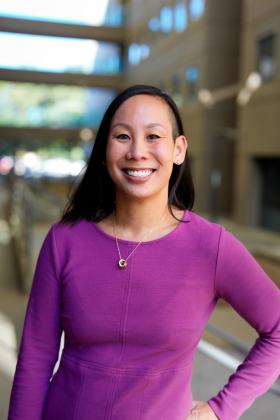
Dr. Au’s research involves the assessment of dietary intakes and
the food environment for the prevention of obesity in low-income,
racially diverse infants and children. Her focus is on
understanding how to promote healthier eating and prevent obesity
in federal nutrition assistance programs, such as the Special
Supplemental Nutrition Program for Women, Infants, and Children
and the National School Lunch Program.
Noli Brazil received his doctorate in Demography from the
University of California Berkeley in 2013, and is an Assistant
Professor in the Department of Human Ecology. His research and
teaching interests focus on the causes and consequences of
neighborhood inequality. Current research projects include
examining the interactions between neighborhoods and schools,
understanding the determinants of residential mobility and
attainment during young adulthood, and Hispanic US internal
migration.
Dr. Falbe’s research focuses on studying programmatic, policy,
and environmental interventions to prevent chronic disease and
reduce health disparities. Dr. Falbe led an evaluation of the
nation’s first soda tax in Berkeley, California. Her research has
also examined primary care nutrition and physical activity
interventions for youth, healthy retail programs, and
multi-sector community interventions to prevent obesity. Dr.
Falbe received a dual doctorate in Nutrition and Epidemiology in
2013 from Harvard University.
Gail Goodman received her degree in Developmental Psychology from
UCLA in 1977. Her areas of research expertise include welfare
recipients, foster care, and the intergenerational transmission
of attachment insecurity.
Lisa Pruitt’s areas of research include legal and policy
implications of income inequality along the rural-urban continuum
and legal aspects of declining mobility, with an emphasis on
diminishing access to higher education.
Leticia Saucedo received her degree, cum laude, from
Harvard Law School in 1996. Her research centers on employment
and immigration law, immigrants in low-wage workplaces and the
structural dynamics affecting their entry.
Marianne Page is a Professor of Economics and
Co-Director of the Center for Poverty & Inequality Research
at UC Davis. She has authored numerous scholarly articles
focusing on low-income families. A labor economist, she is
an expert on intergenerational mobility and equality of
opportunity in the United States. She has also published on
issues related to the U.S.
1138 Social Sciences & Humanities Building
Davis, CA
Paul Hastings received his degree from the University of Toronto.
His research focuses on the impact of stressors on child and
adolescent well-being, and the effects of poverty on
physiological reactivity, regulation and development of mental
and physical health problems.
Cassandra Hart is a professor of education policy. She evaluates
the effects of school, state and national education programs,
policies, and practices on overall student achievement, and on
the equality of student outcomes. Hart’s recent work has
focused on school choice programs, school accountability
policies, early childhood education policies, and effects on
students of exposure to demographically similar teachers.
She is also interested in the effects of virtual schooling on
student outcomes, both in K-12 and post-secondary settings.
Giovanni Peri received his degree in Economics from UC Berkeley
in 1998. His research focuses on the determinants of
international migrations and their impact on labor markets,
productivity, and investments.
1140 Social Sciences & Humanities Building
Davis, CA
Ross A. Thompson’s research focuses on the applications of
developmental research to public policy concerns, including
school readiness and its development, early childhood
investments, and early mental health.
Michal Kurlaender’s work focuses on education policy and
evaluation, particularly practices that address existing
racial/ethnic and socioeconomic inequality at various stages of
the educational attainment process.