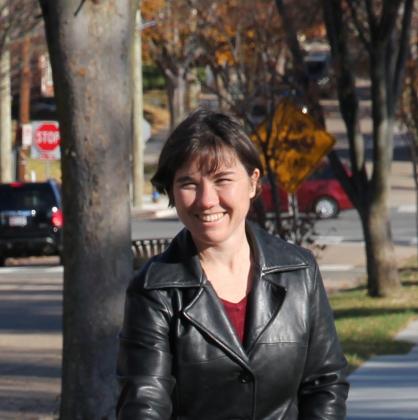
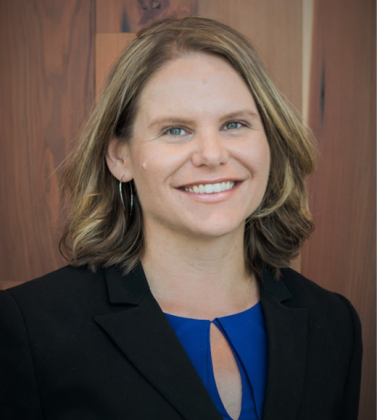
Dani Sandler is a principal economist at the U.S. Census Bureau’s
Center for Economic Studies, where she leads research efforts,
supports collaborative projects, and develops statistical
products. With over a decade of experience at the Census Bureau,
Dani has held various roles, including FSRDC administrator and
research economist. She currently facilitates partnerships
between the U.S. Census Bureau, Princeton’s Evictions Lab, and
the Bureau of Justice Statistics.
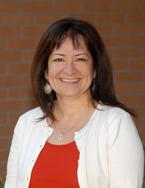
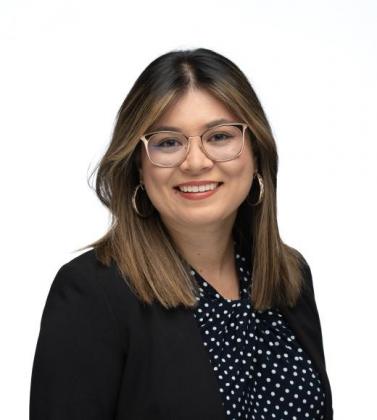
Leticia Saucedo received her degree, cum laude, from
Harvard Law School in 1996. Her research centers on employment
and immigration law, immigrants in low-wage workplaces and the
structural dynamics affecting their entry.
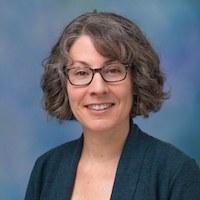
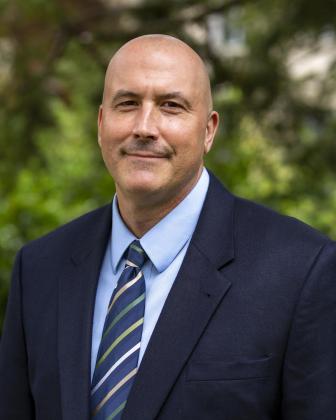
Julia Schleimer is a social epidemiologist and Assistant
Professor with the Centers for Violence Prevention in the
Department of Emergency Medicine. She studies the effects of
social and structural factors, community-based interventions, and
social policies on violence. She has particular interest in
understanding risk and resilience across the life course,
including among children and adolescents, and partnering with
communities to inform and implement solutions. Dr.
Kimberlee Shauman received her degree in Sociology, Population
Demography and Ecology from the University of Michigan in 1997.
Her areas of expertise include social stratification, family and
kinship, demography, sociology of education, and quantitative
methodology.
2245 Social Sciences and Humanities Building
Davis, CA
Monica Singhal is an Associate Professor in the Economics
department at UC Davis. She is also a Research Associate at the
National Bureau of Economic Research and a Faculty Affiliate of
the International Growth Centre. She received her PhD from
Harvard University. Her research focuses on public finance, with
a particular emphasis on taxation and redistribution and public
finance in developing economies.
Professor Stearns is an Associate Professor of Economics at UC
Davis. My current research looks at the effects of
family-friendly policies on labor market choices, productivity,
family structure, and health outcomes. I am particularly
interested in how these policies can be used to reduce gender and
socioeconomic inequality in the workplace and at home.
Dr. Valle is an Assistant Professor of Sociology at
the University of
California, Davis. She is a scholar of migration, race and
ethnicity, and political sociology focusing on the experiences of
Latina/os in the United States.
Professor Ventry is a graduate of UC Los Angeles (B.A., History),
UC Santa Barbara (Ph.D., Economic and Legal History), and New
York University School of Law (J.D.). He is the author of dozens
of articles, book chapters, and an edited volume. His research
interests include tax policy, tax theory and history, family
taxation, legal ethics and professional standards, tax
administration and compliance, distributive justice, and public
finance.
M. Anne Visser is a Professor of Community and Regional
Development in the Department of Human Ecology at the University
of California, Davis. Her research interests include the
socioeconomic implications of the informalization of work and
employment, low-wage and informal labor markets, and the impact
of state policy and socially-based labor market interventions on
economic opportunity.
Dr. Dulce Westberg is an Assistant Professor of Psychology
at the University of California, Davis. Her research examines how
individuals from racially and ethnically minoritized groups
navigate social structures, and how these structures shape
personality and identity development. Drawing on both qualitative
and quantitative methods, she explores life narratives related to
race, ethnicity, gender, and social class to understand their
links to psychosocial adjustment.
Christopher Witko is Executive Director of the University of
California Center Sacramento (UCCS). Prior to joining UCCS, he
helped build Penn State’s new School of Public Policy as its
Associate Director. Witko’s research focuses on how policy shapes
inequality and other economic outcomes, and how economic
disparities shape the politics and the policy process. His work
has appeared in leading political science, public policy, and
public administration journals. Witko’s most recent coauthored
book, Hijacking the Agenda: Economic Power and Political
Influence (2021) won the Gladys M.