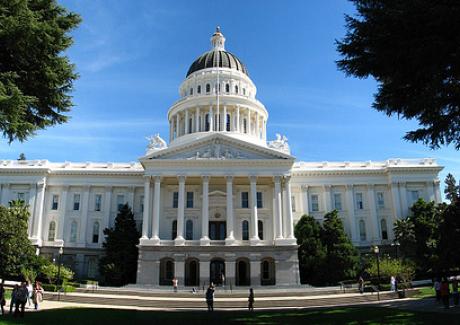
SACRAMENTO, Calif. — The California State Assembly Committee on
Accountability and Administrative Review held hearings in
December 2011 on the problem of inequality and the potential role
of state government. Center for Poverty Research Director Ann
Huff Stevens testified, along with researchers from a variety of
universities and institutes throughout the state.
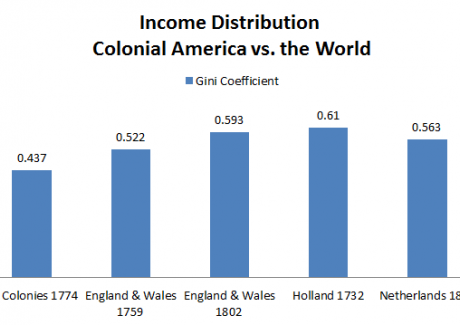
American income inequality may be more severe today than it was
way back in 1774 — even if you factor in slavery. That stat’s
not actually as crazy (or demoralizing) as it sounds, but it
might upend some of the old wisdom about our country’s economic
heritage. The conclusion comes to us from an newly updated study
by professors Peter Lindert of the University of California -
Davis and Jeffrey Williamson of Harvard. Scraping together data
from an array of historical resources, the duo have written a
fascinating exploration of early American incomes, arguing that,
on the eve of the Revolutionary War, wealth was distributed more
evenly across the 13 colonies than anywhere else in the world
that we have record of.
The share of Americans in poverty in 2011 remained unchanged for
the first time in four years, the Census Bureau reported on
Wednesday, surprising economists who had expected the rate to
rise yet again. Still, the report showed a decline in the incomes
of middle-class Americans, offering a reminder that many American
families have yet to experience gains from the weak economic
recovery. Median household income, adjusted for inflation, was
$50,054 last year, officials said, a decrease of 1.5 percent from
2010. The level was about 8 percent lower than in 2007, the year
before the recession began. The measure peaked in 1999, when the
median income for American households reached $53,252.
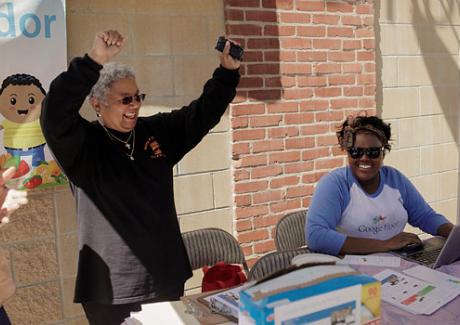
With Google’s promise last year to wire homes, schools, libraries
and other public institutions in this city with the nation’s
fastest Internet connection, community leaders on the long
forlorn, predominantly black east side were excited, seeing a
potentially uplifting force. They anticipated new educational
opportunities for their children and an incentive for developers
to build in their communities. But in July, Google announced a
process in which only those areas where enough residents
preregistered and paid a $10 deposit would get the service,
Google Fiber. While nearly all of the affluent, mostly white
neighborhoods here quickly got enough registrants, a broad swath
of black communities lagged.
“This is just one more example of people that are lower income,
sometimes not higher educated people, being left behind,” said
Margaret May, the executive director of the neighborhood council
in Ivanhoe, where the poverty rate was more than 46 percent in
2009. “It makes me very sad.”
A record number of Americans—46.7 million, or nearly 1 in 7–now
uses the food stamp program, according to the Department of
Agriculture. The annual cost of SNAP (the Supplemental Nutrition
Assistance Program, as the food stamp program is officially
known) hit $72 billion last year, up from $30 billion four years
earlier. SNAP’s swelling size and cost have earned it fresh
scrutiny from critics, who say SNAP is making two different
constituencies fat—big corporations and the poor—the first,
figuratively; the second, literally. Many health advocates,
concerned by Americans’ increasing obesity, argue that food stamp
purchases should be disallowed for items high in salt or fat or
sugar—candy, say, or fatty meats, potato chips and soda.
Poverty takes many tolls, but in the United States, one of the
most tragic has been its tight link with a group of infections
known as the neglected tropical diseases, which we ordinarily
think of as confined to developing countries.
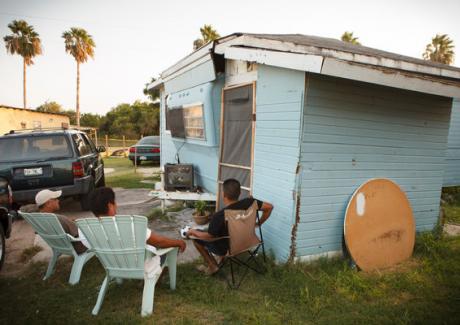
The neglected tropical diseases thrive in the poorer South’s warm
climate, especially in areas where people live in dilapidated
housing or can’t afford air-conditioning and sleep with the
windows open to disease-transmitting insects. They thrive
wherever there is poor street drainage, plumbing, sanitation and
garbage collection, and in areas with neglected swimming pools.
They can even increase the levels of poverty in these areas by
slowing the growth and intellectual development of children and
impeding productivity in the work force. They are the forgotten
diseases of forgotten people, and Texas is emerging as an
epicenter.
Hardship has built a stronghold in the American suburbs. Whatever
image they had as places of affluence and stability was badly
shaken last year, when reports analyzing the 2010 census made it
clear that the suburbs were getting poorer. While the overall
suburban population grew slightly during the previous decade, the
number of people living below the poverty line in the suburbs
grew by 66 percent, compared with 47 percent in cities. The trend
quickened when the Great Recession hit, as home foreclosures and
unemployment surged. In 2010, 18.9 million suburban Americans
were living below the poverty line, up from 11.3 million in 2000.
Three years ago, Gina Ray, who is now 31 and unemployed, was
fined $179 for speeding. She failed to show up at court (she says
the ticket bore the wrong date), so her license was revoked.
When she was next pulled over, she was, of course, driving
without a license. By then her fees added up to more than $1,500.
Unable to pay, she was handed over to a private probation company
and jailed — charged an additional fee for each day behind bars.
It took 14 years of patience, determination and self-confidence —
along with a key measure of local support — for a former foster
child from the streets of Oakland to graduate from UC
Davis. Joe Jackson, 34, earned his bachelor’s degree last
week in women and gender studies, completing a college odyssey
that began nearly a decade and a half earlier at Laney Community
College in Oakland.
Some may say it’s a miracle that Jackson even got into college to
begin with. Few former foster kids make the same journey. A study
by Annie E. Casey Foundation found that only 15 percent of youths
in foster care were enrolled in college preparatory classes,
versus 32 percent of students not in foster care. Fewer than 15
percent of foster children begin college while fewer than 2
percent go on to get a four-year degree.
Most of those who do graduate from college do so with the help of
some type of assistance. In Jackson’s case, that was the Guardian
Scholar program at UCD, which helped him with tuition, housing
and counseling.
These are anxious days for American workers. Many, like Ms.
Woods, are underemployed. Others find pay that is simply not
keeping up with their expenses: adjusted for inflation, the
median hourly wage was lower in 2011 than it was a decade
earlier, according to data from a forthcoming book by the
Economic Policy Institute, “The State of Working America, 12th
Edition.”
Household wealth is dropping. The Federal Reserve reported last
week that the economic crisis left the median American family in
2010 with no more wealth than in the early 1990s, wiping away two
decades of gains.
Poor, urban, and minority residents are most at risk for health
problems linked to climate change, according to a California
Department of Public Health analysis of Los Angeles and Fresno
counties. The department examined social and environmental
factors ranging from the rising sea level to public
transportation access and found that African Americans and
Latinos living in these counties are more likely to be exposed to
health and safety risks related to poor air quality, heat waves,
flooding, and wildfires stemming from climate change.
The study also found that there was a notable economic disparity
between families living in the areas most vulnerable to climate
change and those who didn’t — the more at-risk families earned
between 40 and 55 percent less each year than the least
vulnerable families. Residents living downtown or in urban areas
were also more vulnerable, the study said. A western portion of
Fresno County near Mendota also was found to be especially
susceptible to climate change-related safety and health problems.
For this generation of young people, the future looks bleak. Only
one in six is working full time. Three out of five live with
their parents or other relatives. A large majority — 73 percent —
think they need more education to find a successful career, but
only half of those say they will definitely enroll in the next
few years.
No, they are not the idle youth of Greece or Spain or Egypt. They
are the youth of America, the world’s richest country, who do not
have college degrees and aren’t getting them anytime soon.
Legislation to provide nearly a billion dollars in middle-class
college and university scholarships passed the Assembly on
Wednesday, but lawmakers have not yet taken up a companion bill
to provide funding. The funding measure, Assembly Bill 1500, is
fiercely opposed by most Republicans, branded a tax hike by
business opponents, and faces far tougher sledding getting the
required two-thirds super-majority vote in the Legislature.
Middle-class scholarships will not be provided unless both bills
pass the Legislature and are signed into law.
In the 1990s, the term “digital divide” emerged to describe
technology’s haves and have-nots. It inspired many efforts to get
the latest computing tools into the hands of all Americans,
particularly low-income families.
Those efforts have indeed shrunk the divide. But they have
created an unintended side effect, one that is surprising and
troubling to researchers and policy makers and that the
government now wants to fix.
Research Affiliate Giovanni Peri has proposed a new immigration
permit system that would replace the current waiting list and
lottery with a work permit auction. The new approach is based on
Peri’s economic research that found that immigration often helps
native-born workers in the U.S. by raising overall productivity.
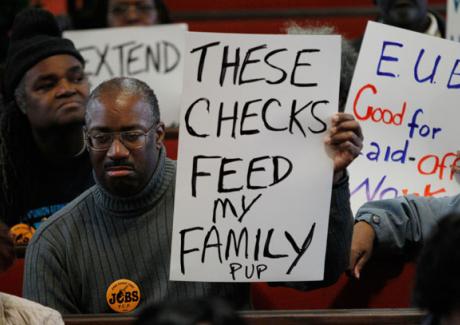
Unemployed workers in rural California are bracing for next
Saturday: the day the state’s chronically unemployed will be cut
off from the nation’s jobless benefits. A drop in California’s
unemployment rate to 11 percent – its lowest mark in three years
– is triggering the federal cutoff of emergency long-term
unemployment pay to at least 93,000 Californians.
Parents hoping to enroll their children in the best public
schools have long known that where you live matters and that
housing prices can be dictated by the quality of the nearby
schools. A new study from the Brookings Institution quantifies
that price gap, and the differences between the cost of living
near a high-scoring public school and a low-performing one are
striking.
It is tax time, the season when the country’s largest antipoverty
program, the earned income tax credit, plows billions of dollars
into mailboxes and bank accounts of low-income working Americans
like Ms. Spain. It is the most important financial moment of the
year for many people in the bottom half of the wage bracket, a
time to pay off old bills, make car repairs, buy children clothes
and maybe make a big purchase like a refrigerator or a TV.
As incomes among the country’s lowest wage earners continue to
stagnate, the credit has played a critical role in smoothing the
hard edges of an unforgiving labor market for the country’s most
vulnerable workers and helping stem the tide of income inequality
that has been rising among Americans in recent decades.
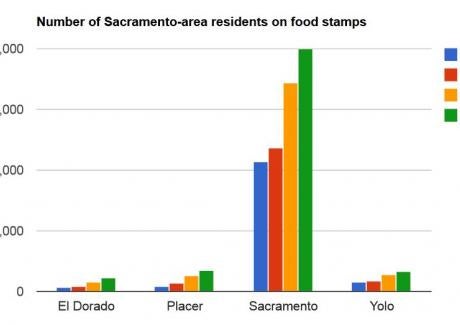
Advocates and state officials have recently taken steps to
encourage enrollment, saying that the benefits bring money to
California. In January, the state eliminated a requirement that
CalFresh participants provide a photo and fingerprints. Still,
many who are eligible for CalFresh don’t apply; the state has
historically had one of the lowest participation rates in the
country. This chart shows food stamp enrollment over time in the
Sacramento region.
A new study by the Agriculture Department has found that food
stamps, one of the country’s largest social safety net programs,
reduced the poverty rate substantially during the recent
recession. The food stamp program, formally known as the
Supplemental Nutrition Assistance Program, or SNAP, reduced the
poverty rate by nearly 8 percent in 2009, the most recent year
included in the study, a significant impact for a social program
whose effects often go unnoticed by policy makers.
Federal money for the primary training program for dislocated
workers is 18 percent lower in today’s dollars than it was in
2006, even though there are six million more people looking for
work now. Funds used to provide basic job search services, like
guidance on résumés and coaching for interviews, have fallen by
13 percent.
Perhaps no law in the past generation has drawn more praise than
the drive to “end welfare as we know it,” which joined the
late-’90s economic boom to send caseloads plunging, employment
rates rising and officials of both parties hailing the virtues of
tough love. But the distress of the last four years has added a
cautionary postscript: much as overlooked critics of the
restrictions once warned, a program that built its reputation
when times were good offered little help when jobs disappeared.
Despite the worst economy in decades, the cash welfare rolls have
barely budged.
Some may be surprised to know that even in California, “poor,
dense communities on unincorporated land – which uniformly lack
some combination of sewer systems, clean drinking water,
sidewalks, streetlights and storm drains – have been the victim
of years of neglect. Statewide, PolicyLink, an
Oakland-based public policy research and advocacy institute,
estimates that 1.8 million low-income and often Spanish-speaking
Californians live in such communities, many without the
infrastructure that would curb gastrointestinal illnesses,
respiratory disease symptoms, and other public health and safety
risks. In Parklawn and similar unincorporated communities,
language barriers, legal status and a lack of political know-how
have made it difficult for residents to navigate the governmental
process.”
Researchers have long tried to untangle the complicated mix of
economics, culture, education and contraception (or lack thereof)
that leads to teenage pregnancy. Despite a decline in births to
American teenage mothers over the past two decades, the United
States stands out among developed nations in that its teenagers
are much more likely to give birth than their peers in Canada,
Germany, Norway, Russia (a country that is still advancing on the
spectrum of development) or Switzerland. A new study by
Melissa S. Kearney, an economist at the University of Maryland,
and Phillip B. Levine, an economist at Wellesley College, builds
on their previous research looking at the link between income
inequality and rates of teenage childbirth.
From 1993 to 2010, the incomes of the richest 1 percent of
Americans grew 58 percent while the rest had a 6.4 percent bump.
The income gap narrowed briefly during the Great Recession, as
plummeting stock prices shrunk the portfolios of the rich. But in
2010, the first year of recovery, the top 1 percent of Americans
captured
93 percent of the income gains.
This Data Snapshot highlights newly available national, state,
and city data in the KIDS COUNT Data Center that shows a 25
percent increase in the number of children residing in areas of
concentrated poverty since 2000. The snapshot indicates how
high-poverty communities are harmful to children, outlines
regions in which concentrated poverty has grown the most, and
offers recommendations to address these issues.
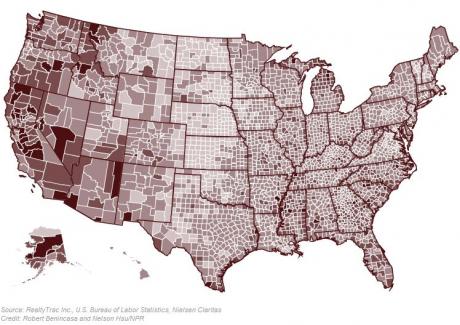
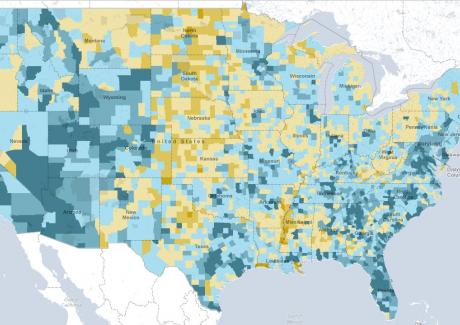
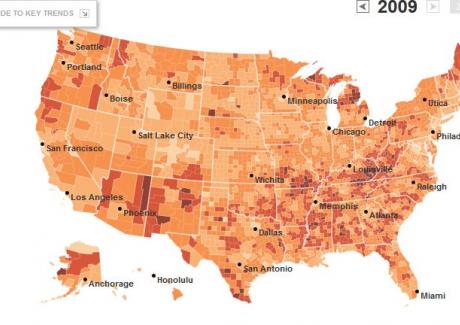
Browse population growth and decline, changes in racial and
ethnic concentrations and patterns of housing development. Data
is derived from the Census Bureau’s American Community Survey,
based on samples from 2005 to 2009. Because these figures are
based on samples, they are subject to a margin of error,
particularly in places with a low population, and are best
regarded as estimates.
This map shows the dependence on government benefits by state.
The article maintains that the share of Americans’ income that
comes from government benefit programs, like Medicare, Medicaid
and Social Security, has more than doubled over the last four
decades, rising from 8 percent in 1969 to 18 percent in 2009.
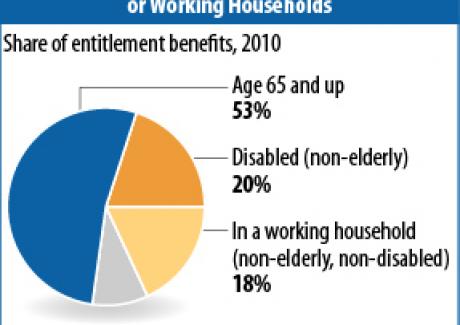
CBPP analysis of budget and Census data shows that more than 90
percent of the benefit dollars that entitlement and other
mandatory programs spend go to assist people who are elderly,
seriously disabled, or members of working households — not to
able-bodied, working-age Americans who choose not to work.
Education has historically been considered a great equalizer in
American society, capable of lifting less advantaged children and
improving their chances for success as adults. But this article
maintains that a body of recently published scholarship is
suggesting that the achievement gap between rich and poor
children is widening.