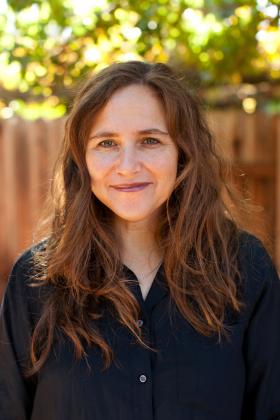
Professor Beatty is a Professor in the Department of Agricultural
and Resource Economics at the University of California,
Davis. His research relates to the empirical analysis of
consumption behavior, in particular as it relates to health
outcomes. Professor Beatty’s research has tended to focus on food
consumption and the demand for nutrition and health, at both the
household and aggregate levels.
Marianne Bitler is a Professor in the Department of Economics at
the University of California, Davis; a Research Associate at the
National Bureau of Economic Research; and a Research Fellow at
IZA. She received her PhD from the Massachusetts Institute of
Technology in 1998. Her research focuses on the effects of the US
social safety net on poverty, income, human capital, and health;
economics of the family; economics of education; and health
economics.
Erin Hamilton received her degree in Sociology from the
University of Texas, Austin in 2009. Her current research
investigates the social and demographic sources of international
migration from Mexico to the United States.
2244 Social Sciences and Humanities Building
Davis, CA
Cassandra Hart is a professor of education policy. She evaluates
the effects of school, state and national education programs,
policies, and practices on overall student achievement, and on
the equality of student outcomes. Hart’s recent work has
focused on school choice programs, school accountability
policies, early childhood education policies, and effects on
students of exposure to demographically similar teachers.
She is also interested in the effects of virtual schooling on
student outcomes, both in K-12 and post-secondary settings.
Camelia Hostinar is a developmental psychologist who studies how
the social environment shapes child and adolescent health,
with a focus on the activity of the stress-response and immune
systems. She is probing the pathways linking poverty to
later risk for disease and investigating protective
psychosocial processes such as supportive
relationships that could help reduce this risk.
CMB Office: 202 Cousteau Place, Room 254
Young Hall Office: One Shields Ave., Room 174F
Dr. Ko looks at how policy, healthcare, and our social structure
are interconnected, and their impacts on disadvantaged
communities. She has conducted research on a variety of topics,
including the healthcare safety net, Medicaid, long-term care,
access to healthcare for minority populations, diversity in
medical education, and the healthcare workforce.
Michal Kurlaender’s work focuses on education policy and
evaluation, particularly practices that address existing
racial/ethnic and socioeconomic inequality at various stages of
the educational attainment process.
The official poverty rate is 10.6 percent, based on the U.S. Census Bureau’s reports for 2024. That year, an estimated 35.9 million Americans lived in poverty according to the official measure. The poverty rate fell 0.4 percentage points from 2023. According to the supplemental poverty measure, the rate was 12.9 percent, statistically unchanged from 2023.
The U.S. Census Bureau defines “deep poverty” as living in a
household with a total cash income below 50 percent of its
poverty threshold. According to the Census Bureau,
16.8 million people lived in deep poverty in 2024. Those in
deep poverty represented 5.0 percent of the total population
and 47.8 percent of those in poverty, up from 34 percent the
previous year.
Un salario mínimo es el salario más bajo que empleadores pueden
legalmente pagar a su empleados. La primer ley del salario mínimo
fue promulgada en 1894 en Nueva Zelandia.
Al aprobar del Fair Labor Standards Act of 1938 (FLSA), el
salario mínimo en Estados Unidos fue inicialmente establecida a
$0.25 por hora para trabajadores cubierto. Desde entonces, se
aumentó 22 veces—recientemente, en julio del 2009, a $7.25 por
hora.
En 2013, 45.3 millones de personas eran pobres. La mayoría de
estas personas que viven debajo del índice federal de la pobreza
no trabajan. Según los datos del Bureau of Labor Statistics, solo
10.5 millones o 23 por ciento de los pobres eran “trabajadores
pobres.”
Desde que fue instituido en 1938, el salario mínimo federal ha
establecido un piso mínimo para salarios. Aunque no todos los
trabajadores son elegibles, ofrece un mínimo de ingresos para los
trabajadores que son menos pagados.
The Census Bureau reports poverty rates by educational attainment
for people aged 25 and older. In 2024, the overall poverty
rate for people aged 25 and older was 9.2%.
A minimum wage is the lowest wage that employers may legally pay
to workers. The first minimum wage law was enacted in 1894 in New
Zealand.
With the passage of The
Fair Labor Standards Act of 1938 (FLSA), the U.S.
minimum wage was initially set at $0.25 per hour for covered
workers. Since then, it has been raised 22 separate
times–most recently, in July 2009, to $7.25 an hour.
FSLA provided a number of federal protections for the first time
including
The Centers for Disease Control and Prevention produce data on
health and healthcare in the United States. Health, United
States includes a variety of tables with breakdowns by poverty
status.
The U.S.D.A.’s Economic Research Service monitors the extent and
severity of food insecurity in U.S. households through a
supplement to the Current Population Survey. Responses to a
series of 18 questions are used to determine whether a household
is food insecure.
The official poverty statistics do not track individuals or
households over time so there are no official data on poverty
spells.
Despite the lack of official data, other surveys do provide the
ability to track poverty status over time. Two recent studies
have used differing data sources and methods to provide some
insight into the characteristics of poverty spells.
In 2010, 15% of people lived in poverty. Poverty is not
evenly distributed across neighborhoods and every state has
neighborhoods with higher than average poverty rates.
In 2024, about 82,000 U.S. workers age 16 and over earned exactly
the prevailing federal minimum wage of $7.25 per hour. Another
760,000 had wages below the federal minimum. Together these
workers make up 1.0% of all hourly paid workers.
The proportion of hourly workers paid minimum wage or less is far
below the level of 13% in 1979 when data was first collected on a
regular basis and somewhat lower than recent years.
What were the characteristics of hourly workers paid at or below
minimum wage in 2024?
The “working poor” are people who spend 27 weeks or more in a
year in the labor force either working or looking for work but
whose incomes fall below the poverty
level. According to the U.S. Bureau of Labor Statistics,
6.4 million people who spent at least 27 weeks in the labor force
were poor in 2022 (the most recent year in which such figures
were published). The working-poor rate—the proportion of the
working poor among all people in the labor force for at least 27
weeks—was 4.0 percent in 2022.
In 2011, almost 1 in 5 households included an “additional adult”
— someone who was not the householder, the householder’s spouse
or cohabiting partner.
In 2024, the poverty rates among racial and ethnic groups in the
United States ranged from about 8 percent to about 18 percent.
The poverty rates for racial and ethnic subgroups were:
11.5% for White (any race)
7.6% for White (not Hispanic)
18.4% for Black
7.5% for Asian
15.0% for Hispanic (of any race)
Another way to think about the relationship between poverty and
race or ethnicity is to consider how the racial and ethnic
distribution of people in poverty compares to that of the total
population.
In 2024, the overall poverty rate was 10.6%. Approximately
8.1% of all families in the United States were in
poverty. Poverty rates by type of family ranged from 4.3%
to 30.8%.
In 2024, poverty rates across the four Census geographic regions
ranged from 9.7 percent in the Midwest, 9.8 percent in the
Northeast, 9.9 percent in the West and 11.9 percent in
the South. Because of the South’s largest share of the total U.S.
population, it has the largest number of people who live in
poverty compared to any other region.