The Center’s focus on immigration and poverty is motivated by the
important role immigrants play in the U.S. economy, and by the
Center’s location in the Central Valley of California. Each of
our other research areas: Labor Markets and Poverty, the
Intergenerational Transmission of Poverty, and the Non-cash
Safety Net hold questions that are unique to the immigrant
experience.
For example, what is the connection between low skilled workers’
wages, inequality and immigration? How do access and take-up of
safety-net programs among immigrant populations differ from
native populations? How does the process of immigrant
assimilation affect intergenerational mobility?
Our Research Affiliates across a wide range of disciplines are
employing both quantitative and qualitative research strategies
to shed light on these important questions.
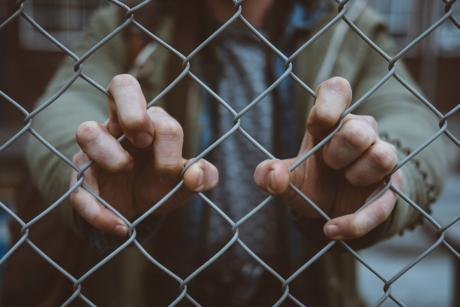
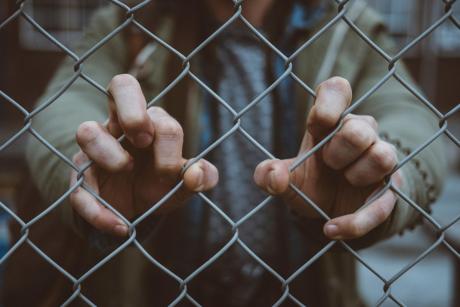
The USA maintains the world’s largest immigration detention system. In two recent studies, we examined the health of detained immigrants in California during detention and following release.
In the first study, we examined confinement conditions (including sleep deprivation, social isolation from family via barriers to visitation, witnessing or experiencing abuse or harassment, and barriers to needed physical and mental health care) and found that each condition increased the likelihood of deleterious physical and/or mental health conditions among study participants.
The 2012 Deferred Action for Childhood Arrivals (DACA) program granted work authorization and protection from deportation to more than 800,000 young undocumented immigrants who arrived to the United States as minors. In a recent study, we investigated the association between this expansion of legal rights and birth outcomes among 72,613 singleton births to high school-educated Mexican-immigrant women in the United States from June 2010 to May 2014 using birth records data from the National Center for Health Statistics.
Though immigration policymaking has traditionally occurred at the federal level, it is increasingly prevalent at sub-national levels, too. In a recent study, we examined the adoption of these policies at the county level in the United States. Specifically, we considered the implementation of migrant labor market regularizations (LRs) between 2004 and 2014. LRs affect aspects of migrant workers’ status in labor markets and include laws and ordinances related to anti-solicitation, language access, local enforcement of federal immigration law, and employment verification.
Among disadvantaged groups, rates of postsecondary enrollment are disproportionately low, with undocumented immigrants facing particularly high barriers to college. In a recent study, we investigated the effects of a decrease in Colorado college tuition on college application and enrollment behavior. Specifically, we used student-level data to analyze a law that granted in-state tuition to certain undocumented students residing in Colorado. We found an increase in the credit hours and persistence of newly enrolled and likely undocumented students in the period after the law was introduced.
The Deferred Action for Childhood Arrivals (DACA) program, implemented in 2012, granted a subset of undocumented youth temporary relief from deportation, as well as work authorization and other benefits. In a recent study, we analyzed both whether and how DACA impacted education and employment among undocumented immigrants in California. We found mixed effects. DACA enabled college for some, but discouraged it for others. DACA recipients perceived substantial occupational mobility, but for many, this was not reflected in movement out of the secondary labor market.
Conditions of confinement in immigrant detention facilities make them a ticking time bomb for COVID-19 infections. The health risks are dire and urgent, but federal and state governments can still take legal action to prevent infections, flatten the curve, and save lives.
Exclusionary immigration policies have led to a sizeable
undocumented population that is largely barred from access to
resources in the United States, however there is little research
that looks at the impact of legal status on immigrants’
psychological wellbeing.
Over the past 45 years, the United States has experienced a
rising standard of living, with real GDP per capita more than
doubling between 1959 and 2004. In contrast, living standards
among some groups seem to have stagnated. Although a number of
studies have documented a correlation between macroeconomic
conditions and poverty, the relationship is not as simple, or as
strong, as one might think. What additional factors can explain
the starkly different trends in economic well-being that are
measured by overall GDP growth and the poverty rate?
This project, funded through the Center for Poverty Research
Graduate Student Fellowship Program, examines whether differences
in state implementation of the Children’s Health Insurance
Program (CHIP) affects disparities in health care between
children of immigrants and children of natives.
American agriculture employs some 2.5 million workers during a
typical year, most for fewer than six months. Three fourths of
these farm workers are immigrants, half are unauthorized, and
most will leave seasonal farm work within a decade. What do these
statistics mean for farmers, for laborers, for rural America?
Reductions in eligibility requirements have significantly
impacted access to safety net programs for immigrants. Research
Affiliates investigate these policy changes to assess how
reductions have affected the success of immigrants in escaping
poverty.
Children of immigrants currently make up one in four of all
children in the United States, and this proportion is expected to
increase to one-third by 2050. On average, children of immigrants
are more likely than children of natives to live in poverty,
experience food insecurity, and live in crowded housing.
Additionally, they are less likely than children of natives to
receive public assistance or to have health insurance. In this
project, investigators provide a comprehensive picture of the
health of children of immigrants in comparison to children of
natives using recent, nationally representative data.
Immigrants from Asia and Latin America are among the fastest
growing populations in the U.S. These newcomers may not have kin
as a source of social support due to family disruption during the
migration process, or they may have network ties to friends and
kin who do not possess the social and economic capital needed to
help increase prospects for social mobility. This project
by Research Affiliate Dina Okamoto seeks to inform policymakers
and practitioners about the issues and challenges that immigrant
families face in poor, urban communities and the role that
Community-Based Organizations play as possible mediators between
government systems and immigrant families.
Around the globe, a growing number of countries are turning to
immigration as a source of farm labor even as agriculture’s share
of employment is falling. Immigrant farmworkers from Mexico are
unquestionably one of the most critical inputs to U.S.
agriculture; their availability affects production technologies
and enhances the ability of U.S. producers to compete with
low-cost producers abroad. Researchers analyze the sustainability
of an agricultural system that depends on foreign sources of
labor, and highlight the importance of labor
productivity-enhancing technological change.
The effects of immigration on low-skilled native workers in the
U.S. is both an active area of research among academics and a
critical component of policy discussions of the costs and
benefits of immigration policies. In a new study, Research
Affiliate Giovanni Peri quantifies the effects of immigration on
wages and poverty rates of native workers in the U.S. over the
past two decades.
In this project, Research Affiliate Dina Okamoto extends prior
research on immigrant youth adaptation by examining whether the
presence of community-based organizations (CBOs) within
neighborhoods serves to protect immigrant youth from risk
behaviors.
The number of adults in the U. S. with learning problems range
from 3-15% of the general population, and of those with learning
problems, approximately 48% are out of the workforce or
unemployed (National Institute for Literacy, 1999). Identifying
and assessing these individuals is critical so that pre- and
postemployment services can be tailored to their learning needs.
To this end, Research Affiliate Gail Goodman and the Center for Public Policy
Research (CPPR) at UC Davis, is developing a short screening
measure for Spanish-speaking adult applicants for the
Welfare-to-Work program to determine those at risk for
learning problems. The entire project is expected to last
approximately three years.