Our policy briefs deliver our cutting-edge research directly to
policy makers, researchers, and stakeholders in an accessible
format. These peer-reviewed resources are short and
informative analyses of our research relating to poverty and
policy.
Violence is a leading cause of death and disparity in the United States. Physical and social environments such as neighborhoods can contribute to the prevention or fostering of violence.
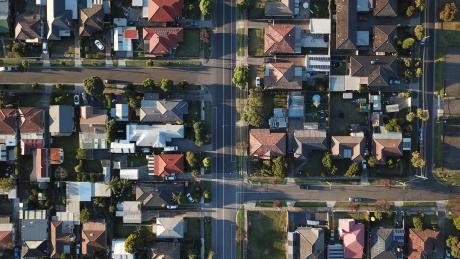
In a recent study, we used machine learning to identify features of the local environment that are most predictive of violence in two cities struggling with disinvestment and crime.
Structural and social inequalities are determinants of poor human development outcomes in low-and middle-income countries. In a recent study of a historically marginalized group in India, we examined the effects of affirmative action in local elections on children’s health and education.
At nearly all public and some private schools, children from low-income households are eligible to receive free and reduced-price school lunches. Most of these schools also offer breakfasts.
In a recent study, we compared nutritional intake between the periods just before and just after the school year begins for children likely to be eligible for free school meals (incomes under 200% of the poverty guideline) versus students unlikely to be eligible.
Programs such as Medicaid, the Supplemental Nutrition Assistance Program (SNAP), and the Special Supplemental Nutrition Program for Women, Infants, and Children (WIC) provide access to vital medical and nutrition services. In a recent study, we investigated whether demographic, social, and economic determinants of health, including length of time spent on these programs, were associated with diet quality and weight status in early childhood.
In a recent study, we examined the extent to which foods and beverages available in the Special Supplemental Nutrition Program for Women, Infants, and Children (WIC) Food Package help to improve the quality of young children’s diets.
To do so, we used diet quality from Healthy Eating Index-2020 scores in conjunction with data related to WIC participation among children aged 2 to 5.
We found that children with high WIC duration had higher total HEI-2020 scores compared with children with low WIC duration.
Exposure to gun violence within one’s own residential community is undoubtedly consequential. However, residents also spend significant time outside of their own neighborhoods, travelling to neighborhoods both near and far. Accounting for the collection of neighborhoods that are connected via resident daily travel, which I term the neighborhood network, contributes to a more complete portrait of gun-violence exposure.
In recent years, cash-assistance programs have been piloted across the United States, typically as Guaranteed Income (GI). In a recent study, we explored how these programs are being designed and evaluated. Reviewing 105 programs covering over 40,000 beneficiaries, we compared eligibility criteria, funding sources, distribution amounts, program administration, pilot duration, and evaluation measures.
In a recent study, we investigated pediatric-onset conditions in the US, seeking to identify recent trends as well as opportunities for prevention and intervention. Specifically, we analyzed chronic conditions (CC) and functional limitations (FLs) in more than 236,000 children (5-17 years) and young adults (18-25 years) between 1999 and 2018.
Though racial disparities in infant health conditions have persisted for decades, evidence regarding their long-term consequences has been limited. In a recent study, I used administrative data from Texas and the shift to Medicaid Managed Care (MMC) to examine the later effects of prenatal MMC on key schooling outcomes.
The Special Supplemental Nutrition Program for Women, Infants, and Children (WIC) provides EBT benefits redeemable for healthful foods for low-income, nutritionally at-risk pregnant/postpartum women and young children. In a recent study, we found evidence of a new form of benefit redemption cycle in WIC, different from that seen with Food Stamps.
During periods of drought, water-conservation efforts and
water-supply management can have significant impacts on
agricultural livelihoods. In a recent study[1] of farmers in
California’s Central San Joaquin Valley, we sought to understand
how and why farmers facing significant water shortages make
livelihood decisions, and how such decisions are affected by
broader socio-political contexts.
The Supplemental Nutrition Assistance Program (SNAP) serves as a safety net for more than 41 million low-income families, but only about 80 percent of eligible individuals participate.[1] Among SNAP-eligible agricultural workers, take-up is likely even lower.[2] In a recent study, we explored the seasonality of agricultural employment and the extent to which its associated administrative burdens impact households’ SNAP eligibility and participation. To measure households’ attachment to SNAP, we used ‘churn’—exit and subsequent re-entry into SNAP—among Fresno County, CA households.
In a recent study[1], we explored whether Black students benefit from being matched to a Black teacher. Specifically, we examined whether it affects the likelihood of them being identified for gifted education programs or special education services.
In a recent study, we explored the dependencies between community food security and local food movements. We analyzed 2.97 million pounds of food-bank donations from 296 organizations, conducted network analysis of the local food system with 77 farms and 439 market connections, and carried out interviews with food-bank donors and staff.
In 2012, the Healthy, Hunger-Free Kids Act (HHFKA) placed strict nutritional requirements on food served at public schools. In a recent study, we explored whether changes to the healthiness of school meals led parents to substitute towards them, away from purchasing meals from supermarkets; and, if so, which households were more willing to do so.
Food companies pay to ensure their products are displayed at store checkouts, where they are more likely to trigger impulse purchases and child purchasing requests. These products, such as candy, chips and sugar-sweetened beverages, are mostly unhealthy. The first jurisdiction globally to implement a healthy checkout policy is Berkeley, California.
Special Supplemental Nutrition Program for Women, Infants, and Children (WIC) food packages for children aged one to four years include a cash value benefit (CVB) redeemable for fruits and vegetables with participating vendors. Beginning in June 2021, the CVB value was increased. In a recent study, we evaluated associations of the augmented CVB with the amount and diversity of redeemed fruits and vegetables. We found that the augmented CVB was associated with greater and more diverse purchases of fruits and vegetables.
Economic recession, societal disruption, and nearly seven million lost lives: the COVID-19 pandemic triggered a global public health crisis with significant consequences for the social, physical, and psychological development of young people.
In a recent study, we examined academic skills among children from low-income families. Specifically, we tested whether these skills were predicted by various factors including neighborhood cohesion, positive mother–child engagement, child self-regulation in early childhood, and the Family Check-Up (FCU) intervention. We found that higher positive mother–child engagement and child self-regulation predicted higher academic skills at school entry.
The COVID-19 pandemic caused reverberations throughout the educational system that disproportionately impacted students of color and those from lower socioeconomic backgrounds. We examined the latest research documenting the disparate educational impacts of the pandemic across racial, ethnic, and socioeconomic status groups—impacts that deepened existing educational inequities in the U.S. Underlying these disparities were numerous systemic barriers, including disproportionate access to in-person learning and technology alongside the intensification of racial discrimination.
The links between structural and social determinants and mental health are well documented. In a recent review[1], we examined the role of neurobiology in those links, seeking to identify ways in which the practice and application of neurobiological research can help to mitigate disparities and inequities in mental health across diverse marginalized and minoritized racial, ethnic, gender, sexual, and economic communities.
The 2021 Expanded Child Tax Credit (ECTC) provided families with children monthly payments from July 2021 to December 2021. In a recent study, we explored the extent to which these payments were associated which changes in adult overall health or household food security. We found that eligibility for ECTC payments was associated with improvements in both.
In a recent study, we explored the relationship between state-level macrostructural characteristics, such as cost of living and anti-poverty programs, and the magnitude of socioeconomic disparities in brain development and mental health. To do so, we analyzed data covering more than 10,000 children across 17 US states. We found that lower income was associated with smaller hippocampal volume (a brain region involved in learning and memory) and higher internalizing psychopathology (denoting conditions such as depression and anxiety).
The USA maintains the world’s largest immigration detention system. In two recent studies, we examined the health of detained immigrants in California during detention and following release.
In the first study, we examined confinement conditions (including sleep deprivation, social isolation from family via barriers to visitation, witnessing or experiencing abuse or harassment, and barriers to needed physical and mental health care) and found that each condition increased the likelihood of deleterious physical and/or mental health conditions among study participants.
Systemic oppression renders the Latinx community particularly vulnerable to the economic and health risks of the COVID-19 pandemic, with psychological consequences for parents and their children. In a recent study, we sought to understand how financial cutbacks and fears of contracting COVID-19 contributed to children’s externalizing behaviors due to increases in maternal stress among low-income Latina mothers. Data were collected from mothers approximately once a month across the first 10 months of the COVID-19 pandemic.
The Special Supplemental Nutrition Program for Women, Infants, and Children (WIC) has been shown to improve birth outcomes. When they reach the age of five, however, children become ineligible to receive it. In a recent study, we examined, for both adults and children, the nutritional and laboratory outcomes of this age-related loss of eligibility. We found little impact on children who aged out of the program, but adult women experienced reduced caloric intake and increased food insecurity.
Precarious work schedules, including last-minute cuts to workers’ shifts, undermine well-being for millions of workers and their families in the United States. In a recent study, we evaluated the extent to which labor regulations can moderate this precarity and its impacts.
Between 2000 and 2015, as the U.S. deported unprecedented numbers of Mexican immigrants, the population of U.S.-born children living in Mexico doubled in size. In a recent study, using data collected in 2014 and 2018 by the Mexican National Survey of Demographic Dynamics (ENADID), we estimated the number of de facto deported children. De facto deported children are U.S.-born children who emigrated to Mexico from the U.S. to accompany a deported parent.
Place-based policies commonly target disadvantaged neighborhoods for economic improvement, typically in the form of job opportunities, business development or affordable housing. In an attempt to ensure that investment is channeled to truly distressed areas, place-based programs narrow the pool of eligible neighborhoods based on a set of socioeconomic criteria. These criteria, however, may not identify the places most in need. In a recent study, we examined the relationship between neighborhood gentrification status and eligibility for a range of place-based improvement programs.
Social and economic inequality are chronic stressors that continually erode the mental and physical health of marginalized groups, undermining overall societal resilience.
The potential ramifications of food insecurity for the development of children with disabilities are often overlooked in broader policy discussions, despite the fact that such ramifications are likely more significant for these children. In a recent study, I investigated how food insecurity relates to the behavioral outcomes of young school-aged children with disabilities across the first two years of their elementary education. Overall, I found that household food insecurity was related to a significant decline in children’s attentional focus.
Because of large acreages, sparse populations, and distinct sociopolitical dynamics, many rural communities are beginning to assemble their own sets of economic indicators to fit unique policy agendas. In a recent paper, we reviewed over thirty years of practical efforts from six regions that created economic development reports. These reports cover only 60 percent of non-metro counties in the US, with more than half having been issued in the last five years.
Historically, Hispanic families have used means-tested assistance less than high-poverty peers, with anti-immigrant politics and policies potentially acting as a barrier. In a recent study, we documented the participation of Hispanic children in three anti-poverty programs: Supplemental Nutrition Assistance Program (SNAP), Medicaid, and Special Supplemental Nutrition Program for Women, Infants, and Children (WIC). We compared across age and parental citizenship, and also explored the correlation of participation with state immigrant-based restrictions.
Blame for widespread food insecurity across the U.S. is frequently directed at the prevailing minimum wage. In a recent study, we examined whether and to what extent increases to the minimum wage improved the quantity and nutritional quality of food purchased by minimum-wage earners.
Poverty is a chronic stressor, associated with disruptions in adolescent development. To illuminate those disruptions, we examined associations of chronic poverty and income changes experienced from pre- to mid-adolescence with hypothalamic-pituitary-adrenal (HPA) axis stress responses in late adolescence.
Disparities in access to healthy food can be partially alleviated by street-food vending. California’s 2018 Safe Sidewalk Vending Act mandates that ordinances cannot regulate street food vendors for reasons beyond public health concerns. In a recent study exploring the overlooked potential of street-food vending, we reviewed municipal ordinances for 58 counties and 213 cities in California. We found that the majority are out of compliance and will need to update regulations.
The 2012 Deferred Action for Childhood Arrivals (DACA) program granted work authorization and protection from deportation to more than 800,000 young undocumented immigrants who arrived to the United States as minors. In a recent study, we investigated the association between this expansion of legal rights and birth outcomes among 72,613 singleton births to high school-educated Mexican-immigrant women in the United States from June 2010 to May 2014 using birth records data from the National Center for Health Statistics.
As public-school closures have increased in number across U.S. cities, opponents have argued that the closures bring many negative consequences, such as greater local crime rates. In a recent study of the 2013 Chicago mass school closure, during which 49 elementary schools were shut, I tested this claim. Looking at each school’s status after closure (vacant, repurposed, or merged with an existing school), I found that vacancy and repurposing into a non-school were associated with decreased crime.
I investigated the maltreatment profiles of child welfare–involved children in special education, examining how those profiles influenced their internalizing and externalizing behaviors. I analyzed data on a sample of 290 children representing approximately 233,000 children involved in the child welfare system and in special education. In doing so, I applied a range of measures, including the poverty level, mental health and marital status of caregivers.
How does prolonged exposure to the Special Supplemental Nutrition Program for Women, Infants, and Children (WIC) affect children’s diet quality? In a recent study, we examined the association between duration of WIC participation and diet quality of 24-month-old children. We found that WIC participation duration was significantly associated with diet quality. Children in the high-duration group had significantly higher Healthy Eating Index 2015 total scores (59.3) than children in the low-duration group (55.3).
Though immigration policymaking has traditionally occurred at the federal level, it is increasingly prevalent at sub-national levels, too. In a recent study, we examined the adoption of these policies at the county level in the United States. Specifically, we considered the implementation of migrant labor market regularizations (LRs) between 2004 and 2014. LRs affect aspects of migrant workers’ status in labor markets and include laws and ordinances related to anti-solicitation, language access, local enforcement of federal immigration law, and employment verification.
A decade after it passed into law, a majority of Americans now support the Affordable Care Act (ACA). In a recent study, I investigated whether the policy itself, through its beneficiaries, changed public opinion and sowed the seeds of its own defense against efforts to repeal it. I found that individuals who enrolled in plans on the health insurance marketplaces had significantly more positive opinions of the ACA after implementation.
Across the United States, the health and economic impacts of the COVID-19 pandemic are much greater for already disadvantaged people. The health and economic burdens faced by people experiencing homelessness make them especially vulnerable.[1] This vulnerability has been heightened further by the widespread curtailing of crucial services for people experiencing homelessness following COVID-19 outbreaks at temporary shelters.
Systemic oppression makes the Latino community especially vulnerable to the economic, health, and psychological risks of the COVID-19 pandemic. Latina mothers, in particular, must navigate the pandemic from their racialized, gendered, and classed positions while caring for children and families. In a recent study, conducted during California’s initial shelter-in-place mandate (March 20 – June 1, 2020), we surveyed 70 Latina mothers from Sacramento and Yolo Counties. We assessed stress, depressive symptoms, and anxiety symptoms among these women.
Among disadvantaged groups, rates of postsecondary enrollment are disproportionately low, with undocumented immigrants facing particularly high barriers to college. In a recent study, we investigated the effects of a decrease in Colorado college tuition on college application and enrollment behavior. Specifically, we used student-level data to analyze a law that granted in-state tuition to certain undocumented students residing in Colorado. We found an increase in the credit hours and persistence of newly enrolled and likely undocumented students in the period after the law was introduced.
The Affordable Care Act (ACA) sought to improve access and affordability of health insurance. Most ACA policies targeted childless adults; the extent to which these policies also positively impacted families with children has been unclear. In a recent study, we aimed to examine changes in health care-related financial burden for US families with children before and after the ACA, based on income-eligibility for ACA policies. Using a difference-in-differences design in a cohort of U.S.
Children growing up in economically disadvantaged contexts are at risk of underperforming academically. Why is this? One explanation may be underdeveloped ‘executive function’, an important collection of attention-regulation skills. Executive function is malleable in childhood, indeed—interventions have been effective in improving it, especially among children facing adversity. In a recent study, we set out to examine whether early-life family income predicted long-term academic achievement, and to investigate the role of executive function in explaining this association.
When young adults (YAs) move out of the family home, they often find themselves in a neighborhood that differs considerably from the one in which they grew up. What are the implications of this kind of residential mobility during this particular phase of life? In a recent study, we examined movement in and out of disadvantaged and advantaged neighborhoods as individuals leave home and experience significant life-course events.
In 2014, Berkeley, California became the first US jurisdiction to tax distribution of sugar-sweetened beverages (SSBs). In a recent study, we interviewed city stakeholders and SSB distributors and retailers and analyzed records in order to identify lessons learned from the implementation of this tax. Our findings emphasized the importance of investing tax revenues back into the community through programs that advance health equity.
The Deferred Action for Childhood Arrivals (DACA) program, implemented in 2012, granted a subset of undocumented youth temporary relief from deportation, as well as work authorization and other benefits. In a recent study, we analyzed both whether and how DACA impacted education and employment among undocumented immigrants in California. We found mixed effects. DACA enabled college for some, but discouraged it for others. DACA recipients perceived substantial occupational mobility, but for many, this was not reflected in movement out of the secondary labor market.