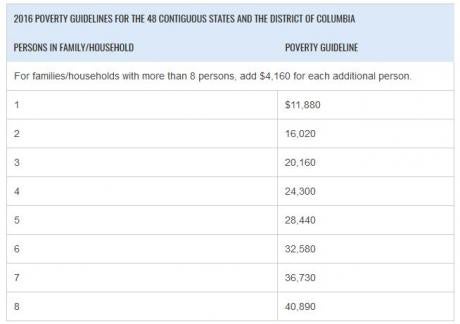
The official poverty statistics, which have been in use since the
1960s, calculate poverty status by comparing a family’s or
an individual’s cash income to their poverty threshold.
In 2011, the Census Bureau issued a paper that laid groundwork
for developing a new Supplemental Poverty Measure (SPM) for the
United States.
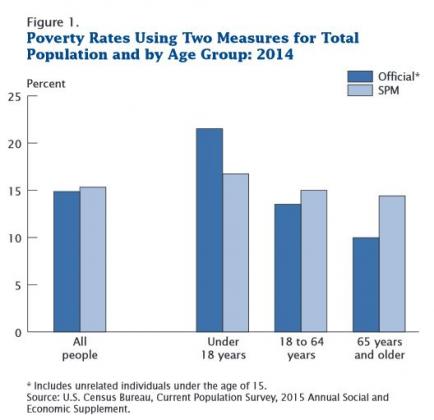
This paper illustrate differences between the official
measure of poverty and a poverty measure that takes account of
in-kind benefits received by families and nondiscretionary
expenses that they must pay.
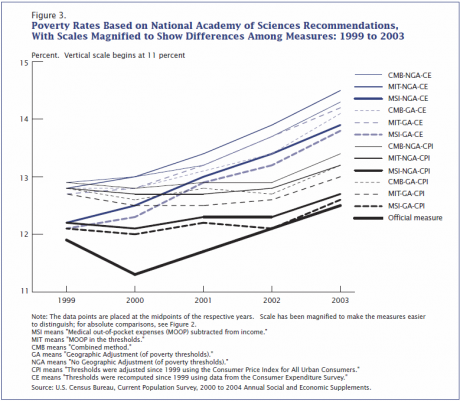
Prior to the publication of the Research Supplemental Poverty
Measure in 2011, the Census Bureau conducted a variety of
studies looking at how income distribution changes when the
definition of income is varied to include or
exclude different components.
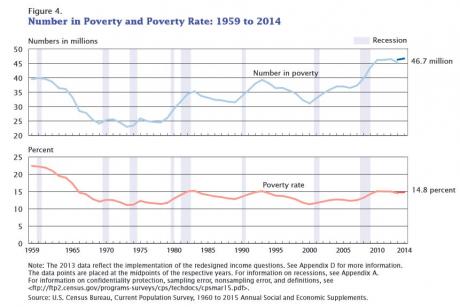
Each year, the U.S. Census Bureau releases a number of public
reports on the level of poverty in the previous year and trends
in the level and composition of the poor from year to year. This
issue of Fast Focus seeks to make sense of these various measures
at the federal, state, and local levels.